
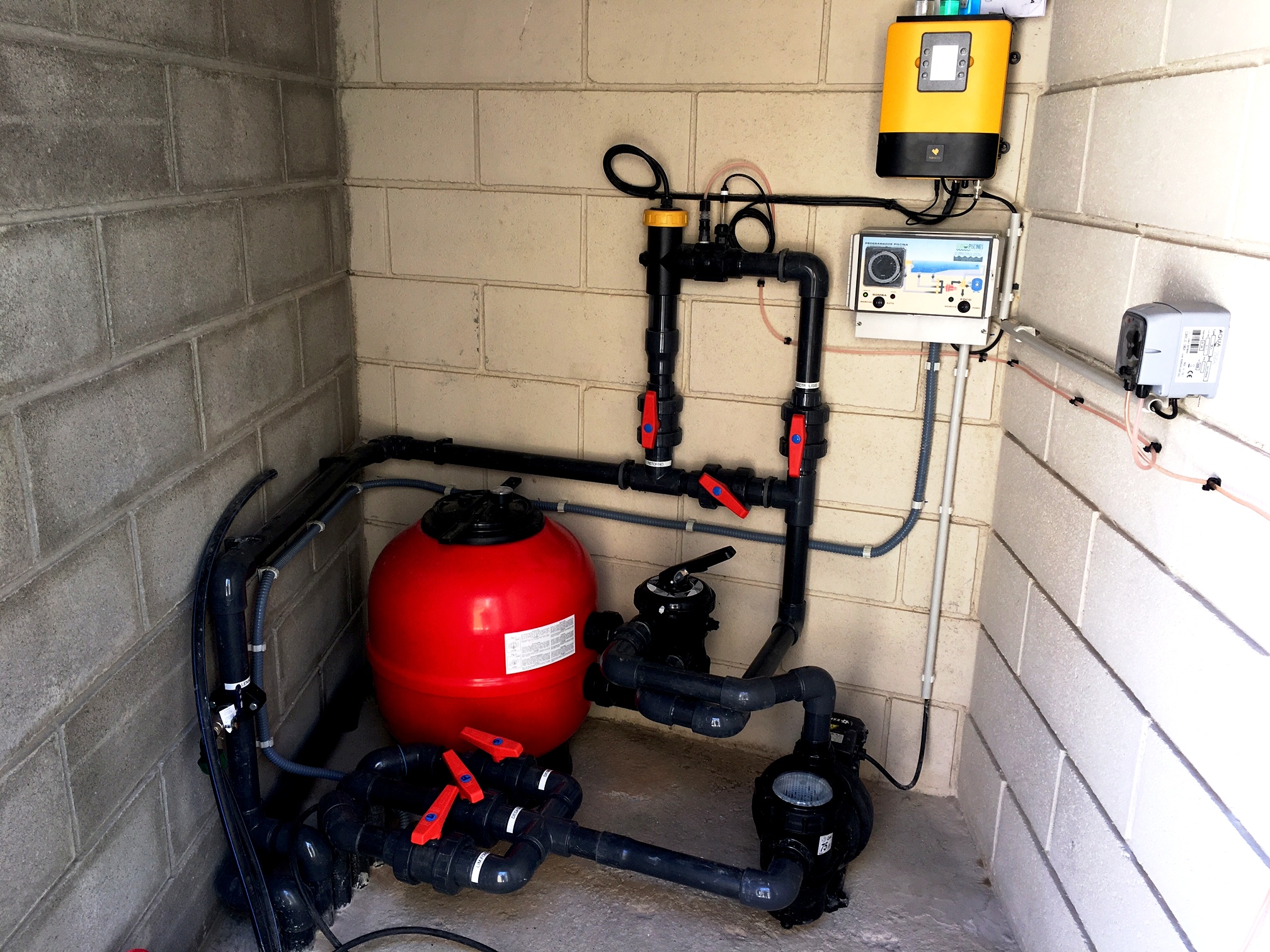
The installation of electrolysis equipment for a saline pool is a process that allows you to keep the pool water clean and disinfected by generating chlorine from the salt dissolved in the water. Here I present a detailed guide on how to perform this installation:
Materials and Tools Needed:
- Saline electrolysis system (including electrolysis cell and control unit)
- High purity salt for swimming pools
- PVC pipes and accessories
- Adapters and connectors
- Shut-off valves
- Plumbing tools (pipe cutters, PVC glue, wrenches, etc.)
- Drill and bits
- Screwdrivers and assembly tools
- Personal protective equipment (PPE)
Steps to Follow:
1. Area Preparation
- Turn Off the Filtration System: Before beginning the installation, be sure to turn off the pool’s filtration system to avoid accidents.
- Select Location: Choose a suitable location for the control unit and electrolysis cell. The control unit must be installed in a dry and protected place, near the filtration system, while the electrolysis cell must be installed in the water return line to the pool.
2. Installation of the Control Unit
- Mounting the Control Unit: Fix the control unit to the wall, following the manufacturer’s instructions. Make sure it is at a suitable height and close to a power outlet.
- Electrical Connection: Connect the control unit to the power source following electrical safety regulations and the manufacturer’s instructions. It may be necessary to install a ground fault circuit breaker (GFCI) for added safety.
3. Installation of the Electrolysis Cell
- Cut the Return Pipe: Identify the return line of the filtration system and cut the pipe where the electrolysis cell will be installed. Make sure the cut is clean and straight.
- Install Adapters and Connectors: Place PVC adapters and connectors on the ends of the cut pipe. Use PVC glue to secure the connections.
- Assemble the Electrolysis Cell: Insert the electrolysis cell between the adapters and secure it following the manufacturer’s instructions. Check that all connections are well sealed to prevent leaks.
4. Connection of the Electrolysis Cell to the Control Unit
- Cable Connection: Connect the cables from the electrolysis cell to the control unit following the diagram provided by the manufacturer. Make sure the connections are tight and secure.
- Checking Connections: Check all electrical and plumbing connections to make sure everything is properly installed and secure.
5. Preparation and Filling of the Pool with Salt
- Calculate the Amount of Salt: Determine the amount of salt needed for your pool based on the electrolysis equipment manufacturer’s recommendations (generally between 3,000 and 3,500 ppm).
- Adding Salt to the Pool: Distribute the salt evenly around the perimeter of the pool. Use a brush to help dissolve the salt more quickly.
- Water Circulation: Turn on the filtration system to help dissolve the salt completely in the water. Let the water circulate for at least 24 hours before activating the electrolysis system.
6. Activation of the Electrolysis System
- Turn on the Control Unit: Turn on the electrolysis system control unit and follow the manufacturer’s instructions to set it up.
- Parameter Adjustment: Configure the parameters of the control unit according to the needs of your pool, such as the amount of chlorine that should be generated.
- Initial Tests: Perform initial water tests to ensure salt and chlorine levels are within recommended ranges. Adjust the system if necessary.
Additional Tips:
- Regular Maintenance: Regularly check and clean the electrolysis cell to prevent the buildup of calcium and other minerals. Follow the manufacturer’s recommendations for maintenance.
- Water Monitoring: Regularly monitor salt and chlorine levels in pool water to ensure effective disinfection.
- Safety: Always follow the manufacturer’s instructions and safety regulations when working with electrical systems and chemicals.
The installation of electrolysis equipment for a saline pool in Balaguer will guarantee automatically clean and disinfected water, reducing the need to manually add chemicals and providing a more pleasant and healthy swimming experience.