
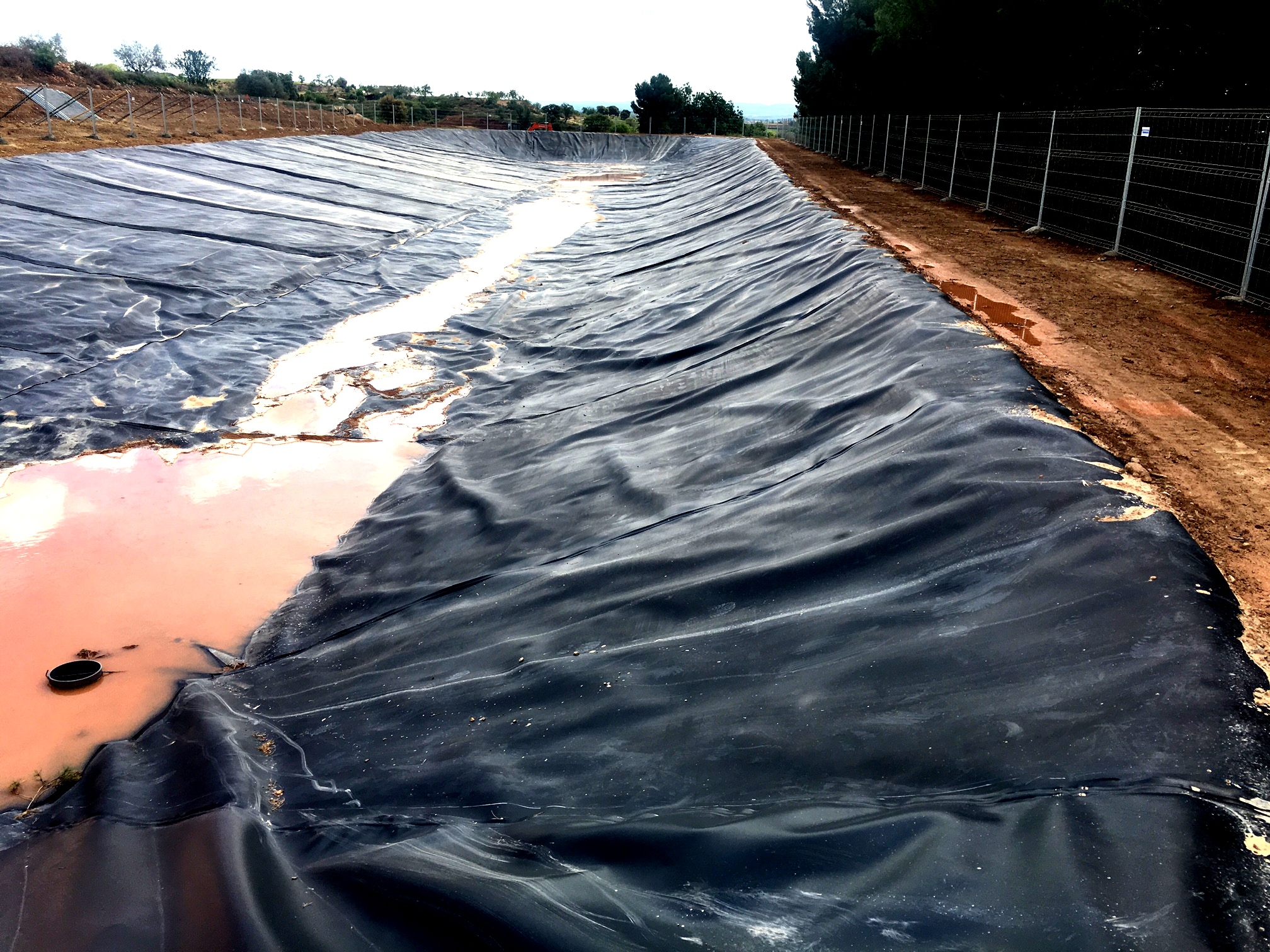
Rehabilitation of a swamp with 1.5 mm flexible high-density polyethylene (FEAD) sheeting involves several specific steps to ensure the structural integrity, effective waterproofing and long-term sustainability of the swamp. Below is a detailed guide on how to carry out this process:
Materials and Tools Needed:
- 1.5mm FEAD sheet
- Protective geotextile
- Excavator and earth moving machinery
- Rollers and compaction tools
- Double Sided Adhesive Tape and Heat Soldering Tools
- Blood pressure monitors and measuring tools
- Fixing anchors
- Personal protective equipment (PPE)
Steps to Follow:
1. Area Preparation
- Swamp Drain: Completely empty the swamp to allow work on the bottom and sides.
- Cleaning and Removal: Clean the surface of the swamp by removing stones, roots, debris and any material that could damage the FEAD sheet. This can be done using heavy machinery and hand tools.
2. Subsoil Inspection and Repair
- Soil Inspection: Check the base of the swamp to detect possible soft or unstable areas that need stabilization.
- Compaction: Compact the soil to ensure a solid, uniform base. Use rollers and compaction tools to achieve a uniform surface.
3. Geotextile placement
- Geotextile Installation: Place a layer of geotextile on the prepared surface of the swamp. The geotextile acts as a protective barrier that prevents the substrate from damaging the FEAD sheet.
- Adjustment and Fixation: Secure the geotextile in place using suitable anchors, paying special attention to edges and corners.
4. Installation of the FEAD Sheet
- Sheet Unfolding: Carefully unroll the 1.5 mm FEAD sheet over the swamp surface, starting from one end and working toward the other.
- Overlap: Ensure that the sheets overlap adequately (usually about 10-20 cm) to ensure continuous waterproofing.
- Welding: Use a heat welding tool to join the sheets at the overlaps. This may require a specific technique to ensure a strong, long-lasting bond.
5. Fixation and Security
- Perimeter Anchoring: Secure the edges of the FEAD sheet in place using anchors or anchor trenches. This will help prevent the sheet from shifting or lifting.
- Tensiometers: Use tensiometers to ensure that the sheet is properly stretched and wrinkle-free.
6. Checks and Verifications
- Visual Inspection: Check the entire surface of the FEAD sheet to ensure there are no perforations, damage or defective welds.
- Airtightness Tests: Perform airtightness tests by partially filling the reservoir and observing possible leaks. Repair any problem areas before continuing.
7. Final Finishes
- Additional Protection: If necessary, place an additional layer of geotextile over the FEAD sheet to provide greater protection against possible damage during swale use.
- Filling and Replanting: Refill the swamp with water. If the environment requires it, consider replanting vegetation on the edges to help stabilize the soil and improve the aesthetics of the swamp.
Additional Tips:
- Climatic Conditions: Perform this work in suitable climatic conditions to ensure that the FEAD sheet is installed without contraction or expansion problems.
- Safety: Always use appropriate personal protective equipment to avoid injuries when working with heavy machinery and welding tools.
- Regular Maintenance: Establish a regular maintenance plan to inspect the integrity of the FEAD sheet and perform repairs if necessary to ensure the longevity of the swamp.
Rehabilitating a swamp with 1.5mm FEAD sheet can be a complex process, but with careful preparation and precise execution, long-lasting and effective waterproofing can be achieved.